You want your child to come home from a family holiday a little braver, a little more sociable, and bursting with stories about what they did, not just what they watched on a screen. That kind of growth rarely happens by accident. It’s built through holiday activity programmes that pair purposeful movement with developmental goals your child won’t even notice they’re working towards.
Structured holiday programmes give children a chance to practise physical, emotional, and social skills in a new setting, away from school routines and familiar peer groups. This article looks at how those programmes support child development and why the right one can turn a school break into something your child carries with them long after the holiday ends.
Key Takeaways: How Holiday Activity Programs Help Child Development
- Structured holiday programmes build physical coordination, strength, and endurance through age-appropriate games and movement.
- Children develop social skills like teamwork, communication, and turn-taking when they join group sessions with new peers.
- Emotional resilience grows as children navigate unfamiliar environments and celebrate small wins, session by session.
- TARKA London holiday camps blend developmental exercise with confidence-building, designed around each child’s needs.
- Cognitive skills sharpen when children solve problems, follow game rules, and adapt to new challenges during active play.
What Are Holiday Activity Programmes and Why Do They Matter?
Holiday activity programmes are structured sessions run during school breaks, designed to keep children physically active and socially engaged. They differ from casual childcare because every game, drill, and group challenge has a developmental purpose behind it.
For children aged 18 months to seven years, the school holidays represent a window where routines shift and social circles change. A well-designed programme fills that gap with purposeful movement, creative play, and guided interaction. Children don’t just stay busy. They build on skills they’ll use back in the classroom and on the playground.
How Do Holiday Programmes Support Physical Development?
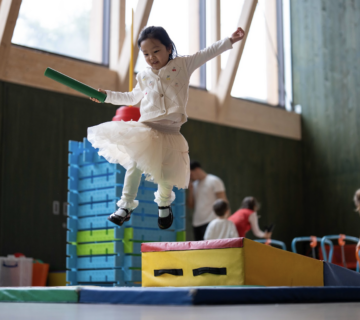
Active play during the holidays helps children strengthen gross motor skills like running, jumping, crawling, and balancing. Programmes that focus on whole-body movement give children the chance to build core strength and coordination in ways that a living room or hotel pool simply can’t match.
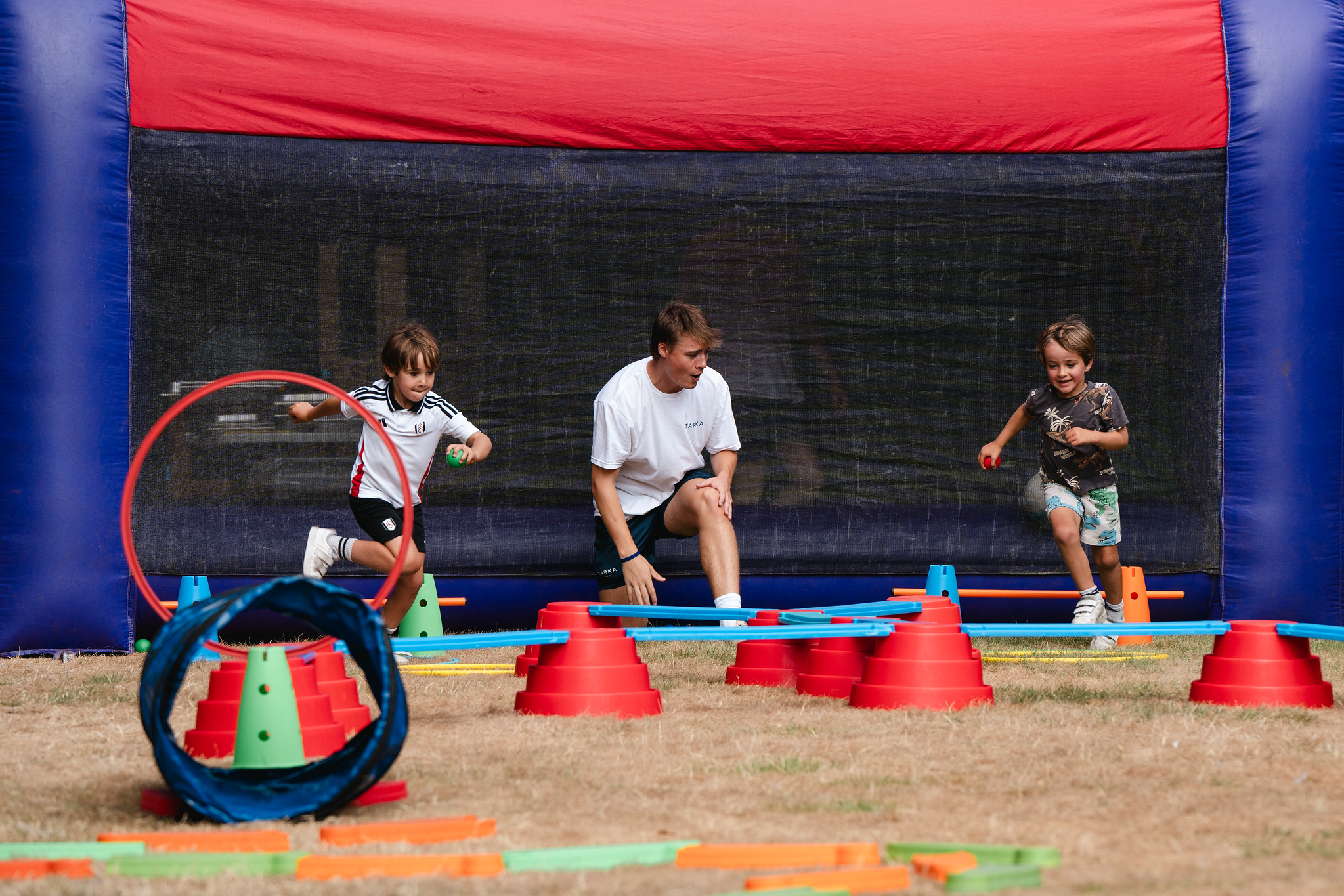
At TARKA London holiday camps, sessions are designed around developmental exercise. Children aged three to seven move through obstacle courses, team relays, and themed adventures that challenge their bodies and sharpen their spatial awareness. A child who arrives cautious about climbing on day one is often leading the warm-up by the end of the week.
A 2025 Frontiers in Psychology study found that gross motor skill development in early childhood is closely linked to improved social behaviour, reinforcing the idea that physical programmes lay the groundwork for broader growth.
How Holiday Camps Build Social Skills and Friendships
When children join a holiday programme, they walk into a room full of new faces. That moment of uncertainty is where social learning begins. Group games require listening, negotiating, sharing space, and working towards a common goal with children they’ve only just met.
These interactions teach turn-taking, conflict resolution, and the art of celebrating someone else’s success. For younger children especially, holiday camps introduce a social environment that’s both structured enough to feel safe and open enough to encourage genuine connection.
TARKA London’s instructors are trained to spot the child who needs an extra nudge of encouragement and the child who needs a challenge to stay engaged. That attentiveness helps every child feel seen, which is the foundation for building real friendships.
Why Emotional Resilience Grows During Structured Holiday Play
Being away from home, facing an unfamiliar game, or losing a relay race for the first time: these are small moments that teach children how to manage disappointment and bounce back. Emotional resilience isn’t something you can explain to a child. It’s something they practise.
Purposeful holiday programmes create safe conditions for that practice. When a child pushes through a game they found tricky the session before, something shifts. That win follows them beyond the programme, into the classroom, the playground, and those first-day-at-something-new moments that matter so much.
Parents often tell us the same thing: it’s not the games their children talk about at dinner. It’s how they felt. Confident. Included. Capable.
How Active Play Sharpens Cognitive Skills During the Holidays
Physical activity and cognitive development are more connected than they might appear on the surface. Running a relay involves remembering rules. Completing an obstacle course requires sequencing steps. Team games demand quick decisions and spatial reasoning.
A 2025 systematic review published in Frontiers in Psychology confirmed that school-based physical activity programmes have a positive effect on executive function development in children. Holiday programmes tap into the same principle, giving children a chance to strengthen memory, attention, and problem-solving skills while they’re having fun.
At TARKA London, every game and every piece of music is chosen to develop a specific skill. Look a little closer at a session and you’ll see coordination, communication, resilience, and teamwork woven into an experience children genuinely want to repeat.
What to Look for in a Developmental Holiday Programme
Not all holiday programmes are designed with child development in mind. When choosing one for your family, consider whether the programme has a clear developmental framework, trained instructors who understand age-appropriate milestones, and a structure that balances physical activity with social and emotional learning.
Ask whether the instructors adapt sessions to individual children. A child who’s naturally confident needs different support from one who hangs back. The right programme meets each child where they are and builds from there, session by session.
TARKA London’s signature blend of Scandinavian early-years education and military leadership principles creates a framework where respect, confidence, independence, and teamwork are built into every session. With camps across multiple London venues, there’s an option for most families.
In Conclusion: Turning Holiday Breaks into Developmental Opportunities
Holiday activity programmes are more than a way to fill the school break. They’re an opportunity for your child to build physical strength, social skills, emotional resilience, and cognitive ability in a setting that feels like play.
The right programme gives your child something that lasts well beyond the holidays: a sense of what they’re capable of. Confident. Included. Ready for what comes next.
Ready to see it for yourself? Explore TARKA London holiday camps, term-time classes, and birthday parties, and join the thousands of London families who’ve already discovered what a difference purposeful, structured play can make.
FAQs About Holiday Activity Programs and Child Development
What age group benefits most from holiday activity programmes?
Children between 18 months and seven years gain the most from structured holiday programmes because this age range is a critical window for physical, social, and emotional development. TARKA London offers sessions for children from 18 months, with age-specific activities designed to match each developmental stage.
How do holiday programmes differ from regular childcare?
Holiday programmes are built around a developmental curriculum, not just supervision. Every session has specific goals for physical coordination, teamwork, and confidence-building. TARKA London’s holiday camps use purposeful exercise and structured games to develop skills that standard childcare doesn’t typically address.
Can holiday camps help a shy child build confidence?
Structured programmes are designed to meet children where they are. A child who hangs back on day one is often participating fully by the end of a camp week. TARKA London instructors are trained to notice each child’s comfort level and give encouragement that builds confidence over time, session by session.
Do holiday activity programmes support cognitive development?
Active play sharpens memory, attention, and problem-solving. Games that require rule-following, sequencing, and teamwork all strengthen executive function. TARKA London builds cognitive challenges into every session through carefully chosen games, drills, and music.
How do I choose the right holiday programme for my child?
Look for a programme with trained instructors, a clear developmental framework, and sessions adapted to your child’s age. Ask whether the programme balances physical activity with social and emotional learning. TARKA London’s developmental exercise approach covers physical, emotional, and social skills in every camp.