Imagine arriving at a new class with your child. There are unfamiliar faces, equipment to explore and a group already gathering. Your child stays close to you, watching. You wonder whether to encourage them forward or give them another moment.
For a parent, that pause can bring questions. Are they enjoying themselves? Is this the right class? At TARKA, our developmental exercise approach gives families a way to explore movement, confidence and social connection together, without making being outgoing the goal.
When Your Child Wants to Watch Before Joining
Some young children need time to observe an unfamiliar setting before participating. The early childhood organisation ZERO TO THREE explains that children approach new people and experiences differently, and some need more time and support to become comfortable.
Its guidance on different temperaments encourages adults to respect those differences rather than trying to change a child’s personality. Being quieter in a new room does not mean your child needs to become someone else.
Try looking at the first session as a chance to understand the setting together. You do not need to decide how successful it was by counting how many games your child joined.
The Small Steps Worth Noticing
Small changes in how your child approaches a class can be worth noticing alongside more obvious participation. Think of these as possible moments to recognise, rather than a checklist your child must complete.
Perhaps they ask the instructor a question, choose a piece of equipment or decide to have another go. You might notice that they tell you about a game afterwards, even though they spent much of the session watching.
These examples are invitations to pay attention, not predictions about what will happen. A useful conversation might begin with, “What caught your attention today?” Leave room for your child to tell you what mattered to them.
If you offer praise, make it specific: “I noticed you asked for help.” That acknowledges something they chose to do, without suggesting they should have done more or comparing them with another child.
How Purposeful Movement Creates Opportunities to Take Part
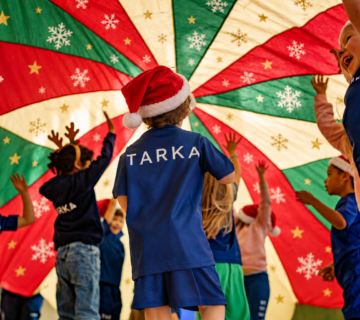
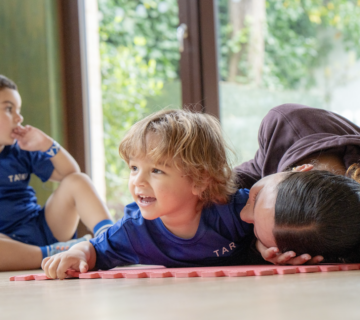
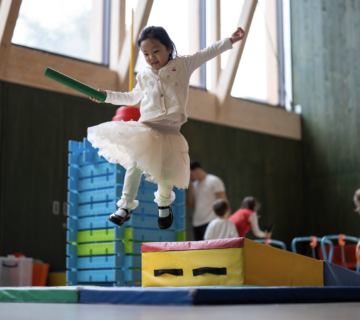
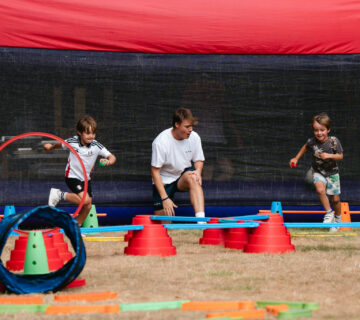
Purposeful movement gives a class a shared focus through games and physical challenges. TARKA designs its programmes around physical, emotional and social skills, bringing movement together with opportunities for communication and teamwork.
Consider the different things a group game can invite a child to practise: listening to an instruction, coordinating a movement, waiting for a turn or communicating with someone else. Participation has several parts; being first to volunteer is only one possible moment.
TARKA’s term-time programmes use age-specific approaches. Recruits introduces younger children to active learning, while Troopers combines movement with imaginative themes. These programme details explain the learning environment, rather than promise a particular result for every child.
Supporting Your Child Without Adding Pressure
Start by talking with the instructor about your child’s needs and the class’s settling-in arrangements. Share something practical, such as what your child enjoys or what you have noticed when they meet unfamiliar people.
Before the session, you could explain what you know about where you are going and who will be there. Keep the description simple and accurate. Afterwards, try an open invitation such as, “Tell me about something you saw,” instead of making joining in the only topic.
Avoid introducing your child as “the shy one”. Give them room to show you how they respond to this particular place, on this particular day. Encouragement can leave space for choice: “Would you like to ask the instructor about that game?”
Follow the arrangements for your child’s age group rather than assuming every class has the same approach to adults staying. If your child is distressed, speak with the instructor about what support or next step is appropriate.
Exploring TARKA Term-Time Classes
TARKA offers term-time classes with different formats for different ages. Recruits is for children aged 18 months to three years, with a guardian staying throughout. Troopers is a drop-off class for children aged three to five.
For older children settling into a drop-off class, TARKA welcomes parents staying initially to help them settle, then encourages them to leave. Speak with the team beforehand about the process and any concerns, so you know what to expect.
You can explore TARKA term-time classes to find the age group and format that fit your child. Start with their needs, ask your questions and look beyond who runs into the room first. There is room for a quieter beginning.